
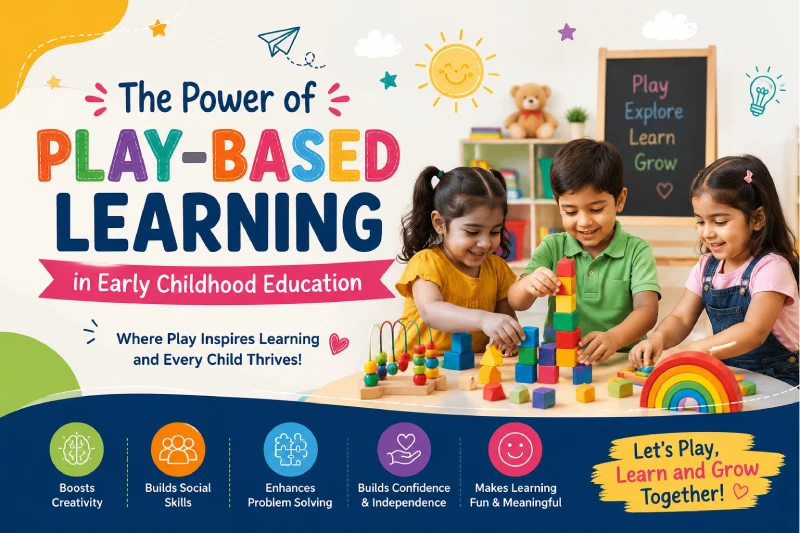
The Power of Play-Based Learning in Early Childhood Education
Children learn best when they are happy, active, and engaged. This is why play-based learning has become an essential part of modern education. It combines fun and learning, helping children develop important skills naturally while enjoying their time in school.
What is Play-Based Learning?
Play-based learning is an approach where children explore, discover, and understand concepts through play. Instead of traditional rote learning, children participate in activities like games, storytelling, role-play, and creative exercises.
This method allows children to learn at their own pace while staying curious and excited.
Why Play is Important for Learning
Play is not just about entertainment—it is a powerful educational tool. Through play, children develop cognitive, physical, and social skills.
Play helps children:
- Improve memory and concentration
- Develop problem-solving skills
- Enhance creativity and imagination
- Build social and communication skills
Types of Play-Based Activities
Different types of activities support different areas of development:
- Creative Play: Drawing, painting, and craft activities boost imagination
- Physical Play: Outdoor games improve strength and coordination
- Social Play: Group activities teach teamwork and sharing
- Pretend Play: Role-playing helps children understand real-life situations
Building Confidence and Independence
When children are allowed to explore and make decisions during play, they become more confident and independent. They learn from their mistakes and develop a sense of responsibility.
This builds self-esteem and encourages them to take initiative in learning.
Role of Teachers in Play-Based Learning
Teachers act as facilitators rather than just instructors. They create a safe and engaging environment where children can explore freely.
A good teacher:
- Guides children without controlling their activities
- Encourages curiosity and questioning
- Supports each child’s unique learning style
Benefits Beyond the Classroom
Play-based learning not only improves academic readiness but also helps children in daily life. They become better at expressing themselves, solving problems, and interacting with others.
These skills are essential for long-term success.
Creating the Right Environment
A well-designed classroom with interactive materials, colorful visuals, and activity zones encourages children to participate actively. A positive and supportive environment makes learning enjoyable.
Conclusion
Play-based learning transforms education into an exciting journey rather than a routine task. It helps children grow into creative, confident, and capable individuals.
By integrating play into education, schools can ensure that children not only learn better but also develop a lifelong love for learning.